Precision CNC Parts,
Made to Print.
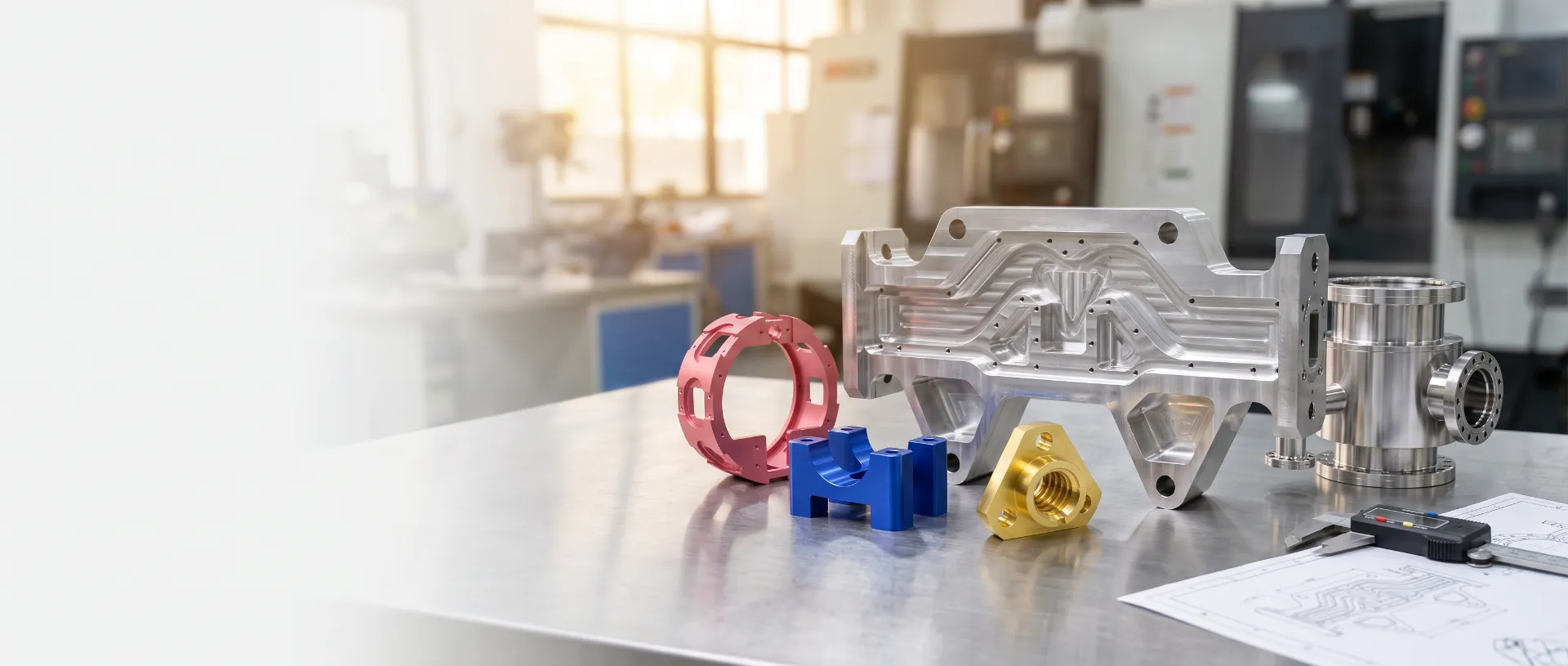
Eight families of custom machined parts — turned, milled and turn-mill — in metals and engineering plastics, from a single prototype to 10,000+ pieces.
Pick the family closest to your part — or simply send the drawing. Our engineers choose turning, milling or turn-mill for you and quote within 24 hours.
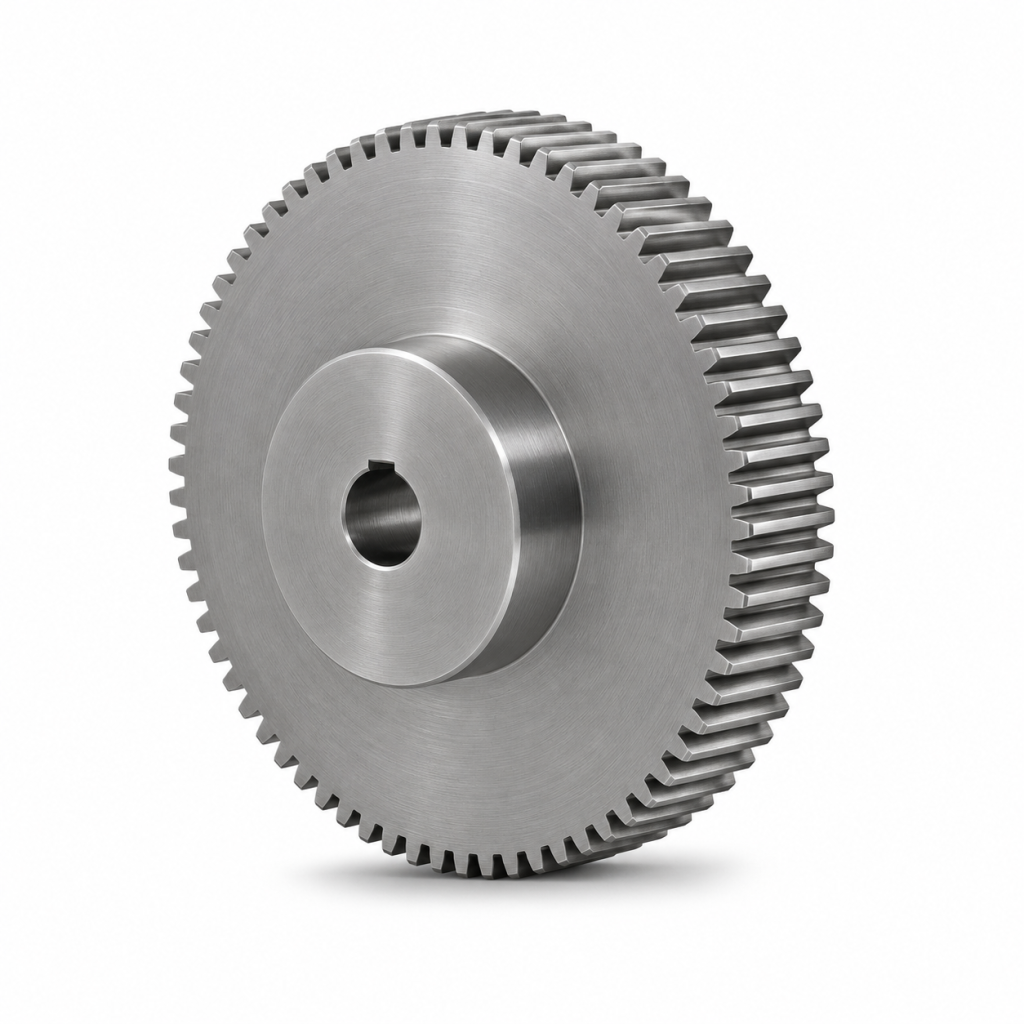
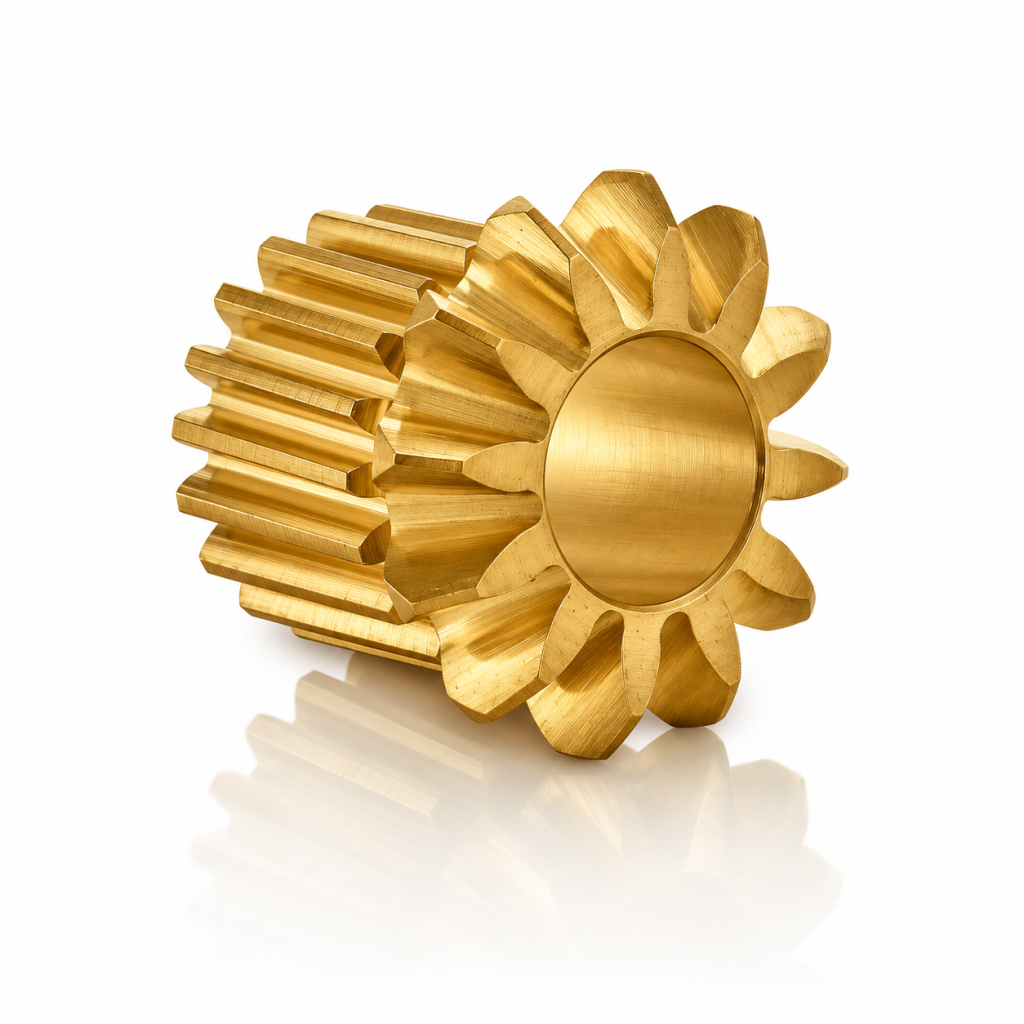
01Spur gears, also known as straight gears, typically have spur teeth and transmit motion and power between parallel shafts. Spur gears are easy to design and manufacture, making them the most cost-effective gear type in many situations. They are a suitable choice when applications require simple, easy-to-assemble gears.Applications: Electronics, construction equipment, machine tools, conveyors and material handling, automotive parts equipment, medical equipment, etc.Materials available: steel, tool steel, heat-treated steel, brass, bronze, copper, cast iron, fiber, plastic.Size range:Maximum mean diameter / maximum 30.0″ Diametral Pitch / From 3.0 to 180 degrees Width/Maximum 13.0″ Cutting teeth / AGMA Q11
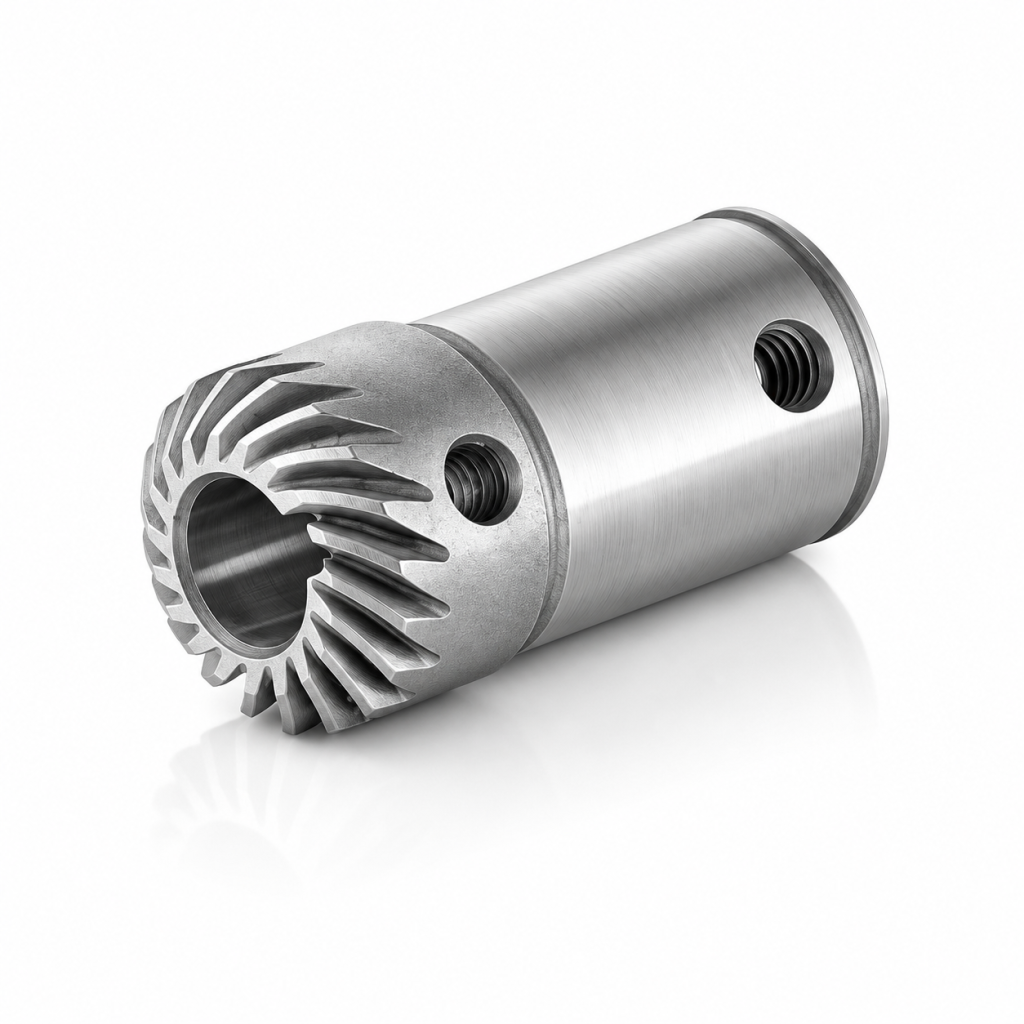
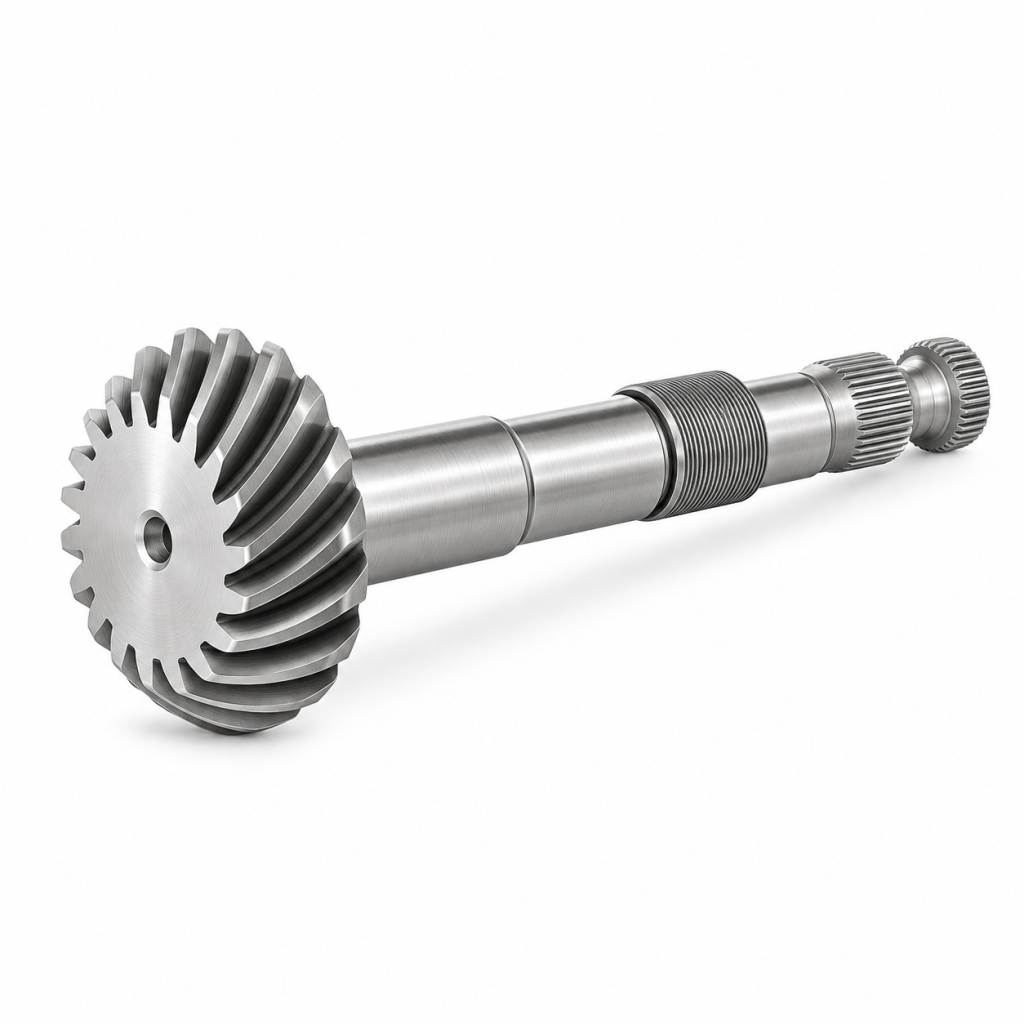
02Bevel gears are designed to engage gears mounted on shafts at virtually any angle. In most cases, bevel gears are mounted on shafts 90 degrees apart, but they can also be designed to operate at other angles. Runsom bevel gears are known for their smoother, quieter performance and greater load capacity. Applications: Locomotives, marine applications, automotive, printing presses, cooling towers, power plants, steel mills, railway track inspection machines, etc. Materials available: Steel, alloy steel, brass, bronze, copper, aluminum, aluminum bronze, cast iron and ductile iron, stainless steel, phenolic resin, nylon/polymer, and tool steel. Size range: Maximum pitch diameter / 4,000″ Diameter pitch / from 10 to 120 Pitch face width / 750″ Cutting teeth / AGMA Q9
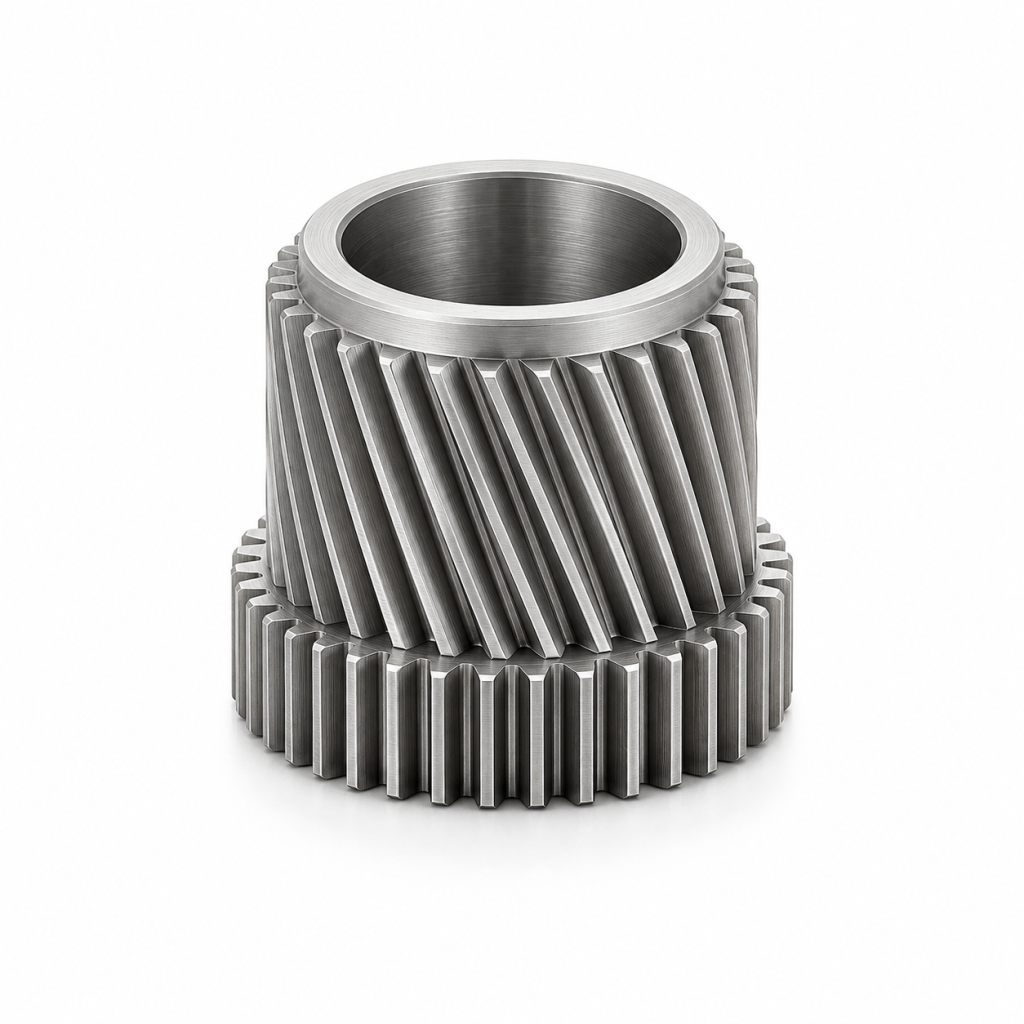
03Similar to spur gears, helical gears are also used with parallel shafts, but the teeth of a helical gear are angled to the axis or bore. Helical gears are very similar to spur gears, except that the teeth of a helical gear are angled to the shaft or bore. Compared to other types of gears used in similar applications, these teeth typically mesh more slowly and smoothly because the load is gradually and evenly transferred, resulting in incredibly quiet and excellent performance. Helical gears are available in left-hand and right-hand options. Applications: Gearboxes, CNC machine tools, robot joints, medical equipment, automotive, etc. Materials available: Steel, hardened steel, stainless steel, aluminum, aluminum alloys, brass, copper, copper alloys, bronze, nylon, non-metallic (phenolic resin). Size range: Maximum pitch diameter/maximum 20.0″ Diameter pitch/from 3.0 – 48 degrees Face width/maximum 13.0″ Cutting teeth/AGMA Q9
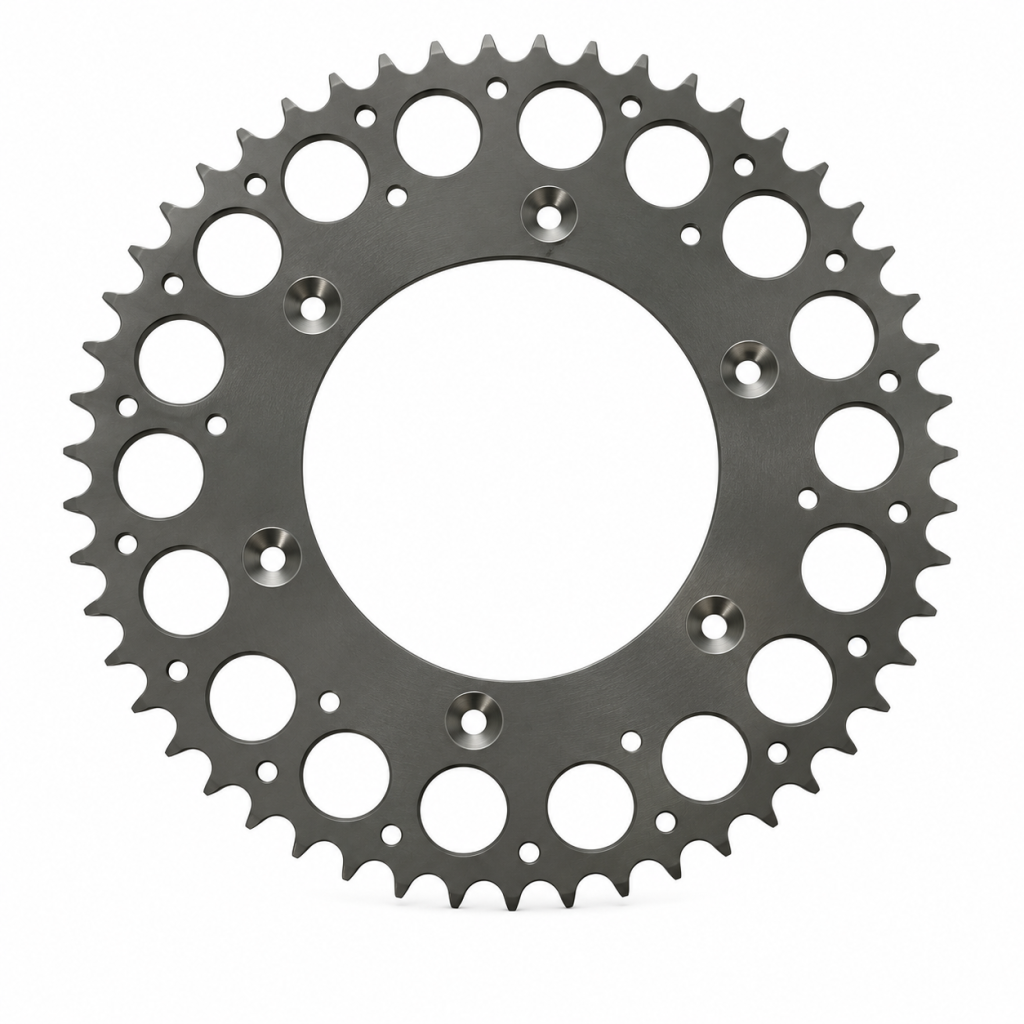
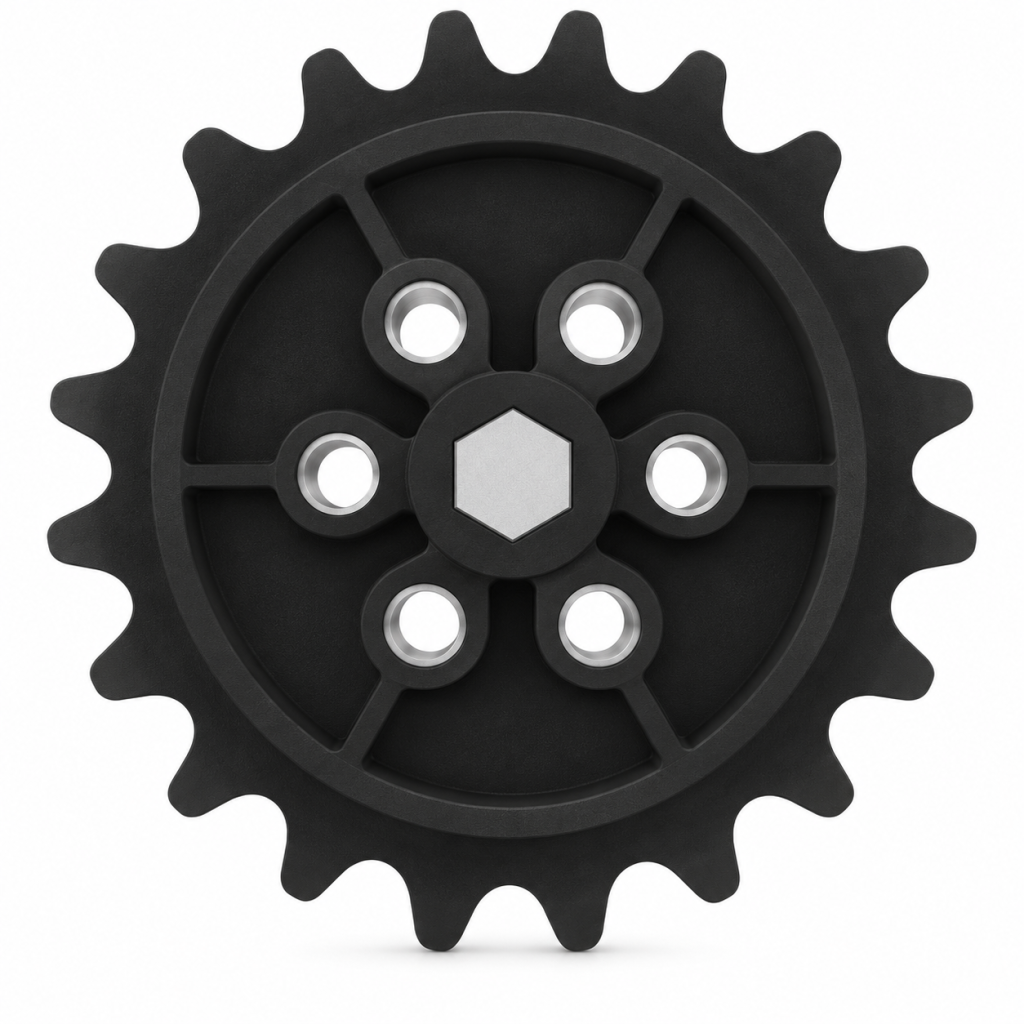
04A sprocket, also known as a chain wheel or sprocket, is a toothed, irregularly shaped wheel that meshes with a chain, track, or other suitable material. Sprockets differ from gears and pulleys because they are used to efficiently transmit motion between two shafts. Runsom manufactures sprockets with tight tolerances, excellent load capacity, and high quality, making them ideal for abrasive applications. Applications: Bicycles, tracked vehicles, motorcycles, and other machinery used to transmit rotational motion between two shafts where gears are not suitable, or to transmit linear motion to tracks, belts, etc. Materials available: Steel, stainless steel, heat-treated steel, alloys, bronze, brass, copper, aluminum, aluminum bronze, cast iron, ductile iron, plastics, phenolic resins, nylon, polymers, and tool steel.
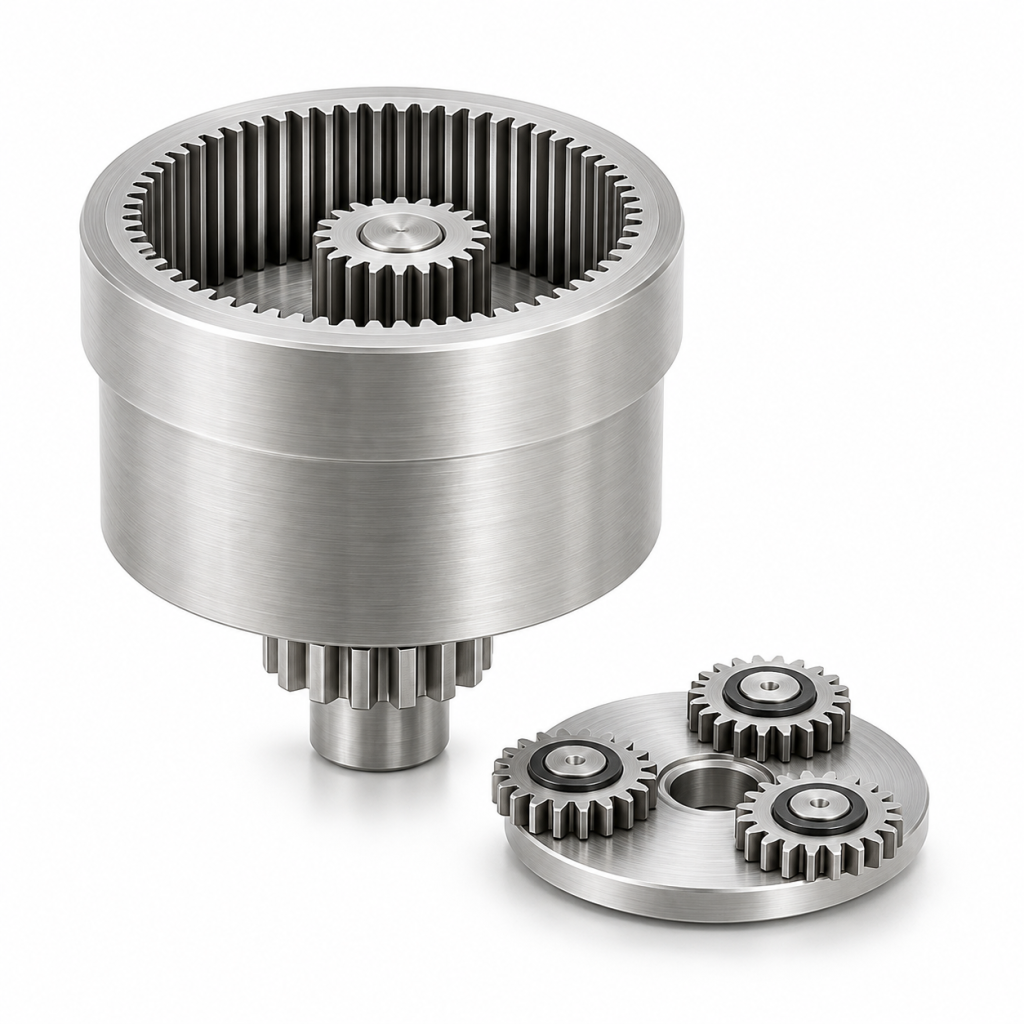
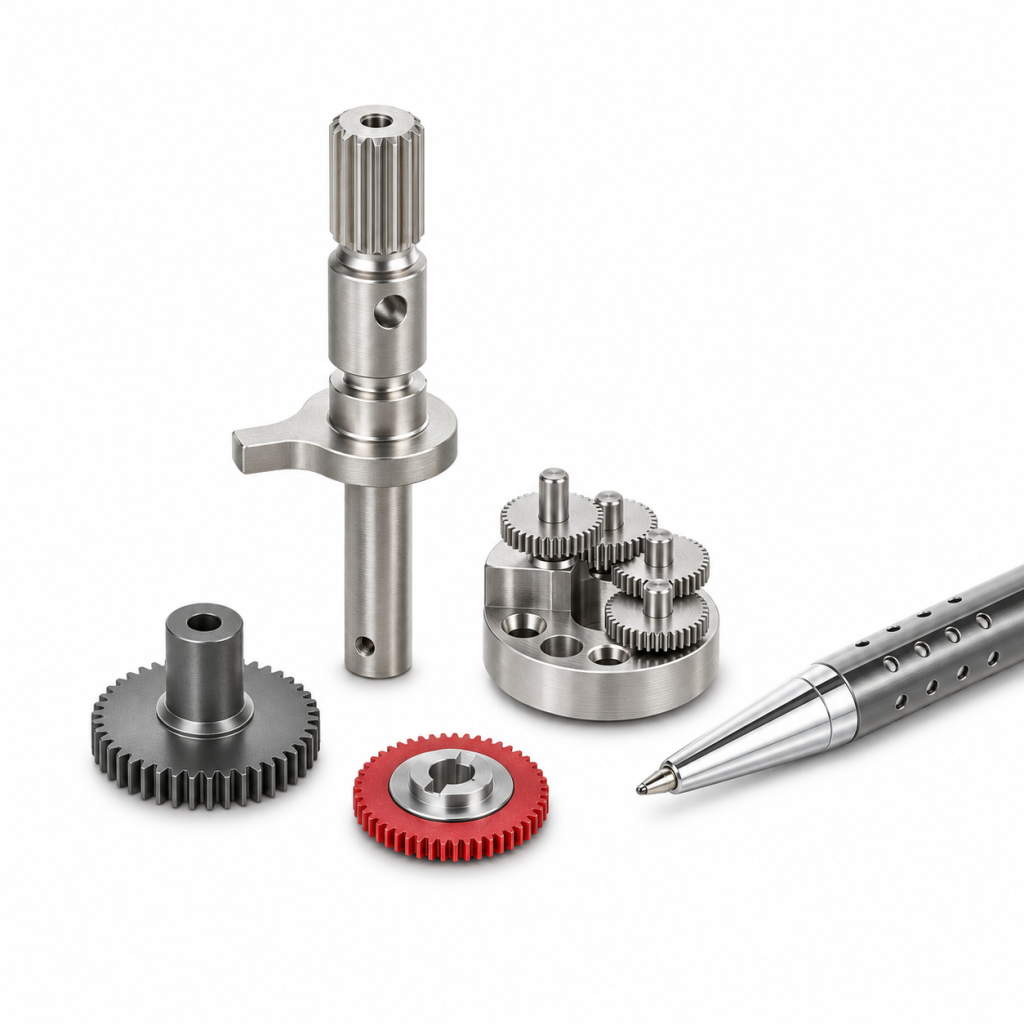
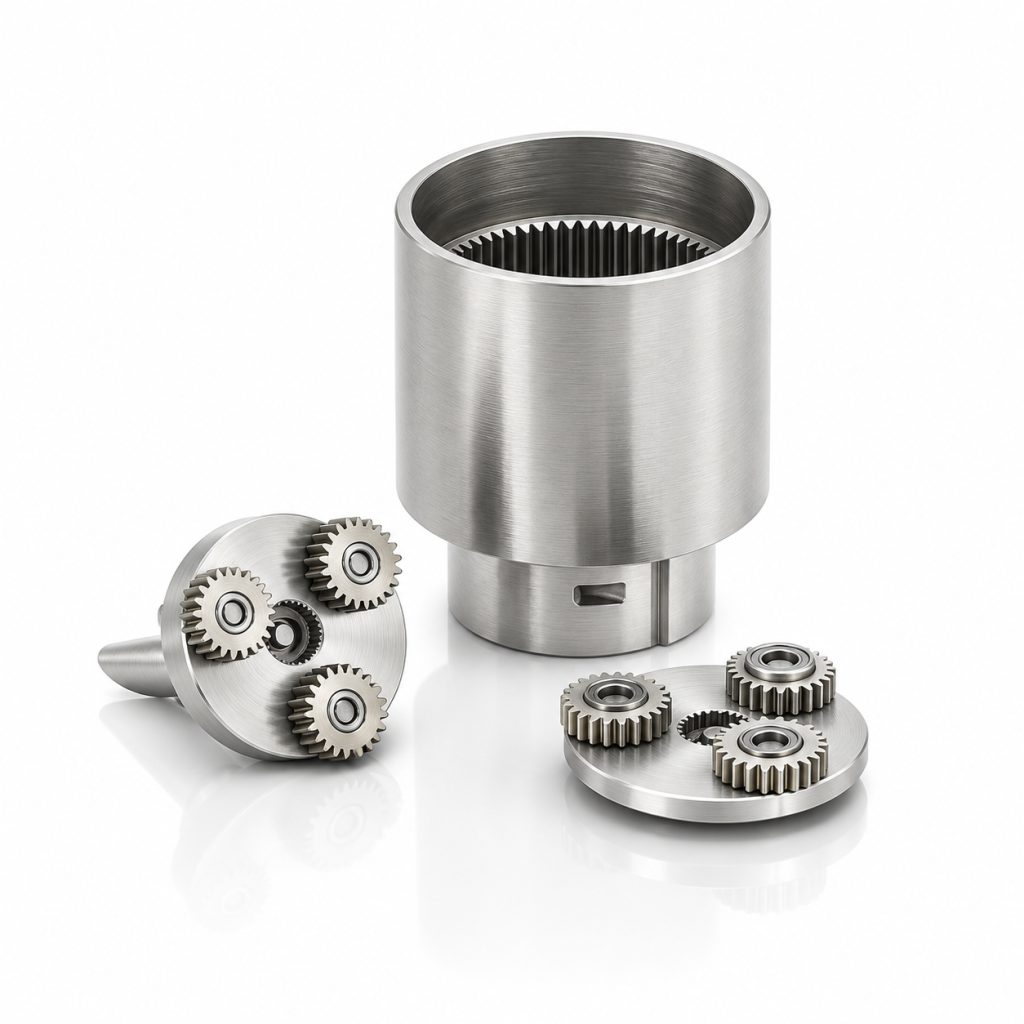
05Planetary gear sets, also known as planetary gear trains, consist of three parts: a ring gear, a sun gear, and multiple planetary gears. Different gear ratios can be easily changed simply by replacing the planet carrier and sun gear. Applications: Because planetary gears are typically smaller than other types of gearboxes, they are used in space-constrained applications. They can also be found in most modern automatic transmissions in the automotive industry. Elsewhere, they can be found in equipment such as augers and wind turbines, and in the drive systems of helicopters and aircraft engines. Runsom manufactures custom planetary gear assemblies and completes the assembly. Depending on the required application, they can be made from a variety of materials.
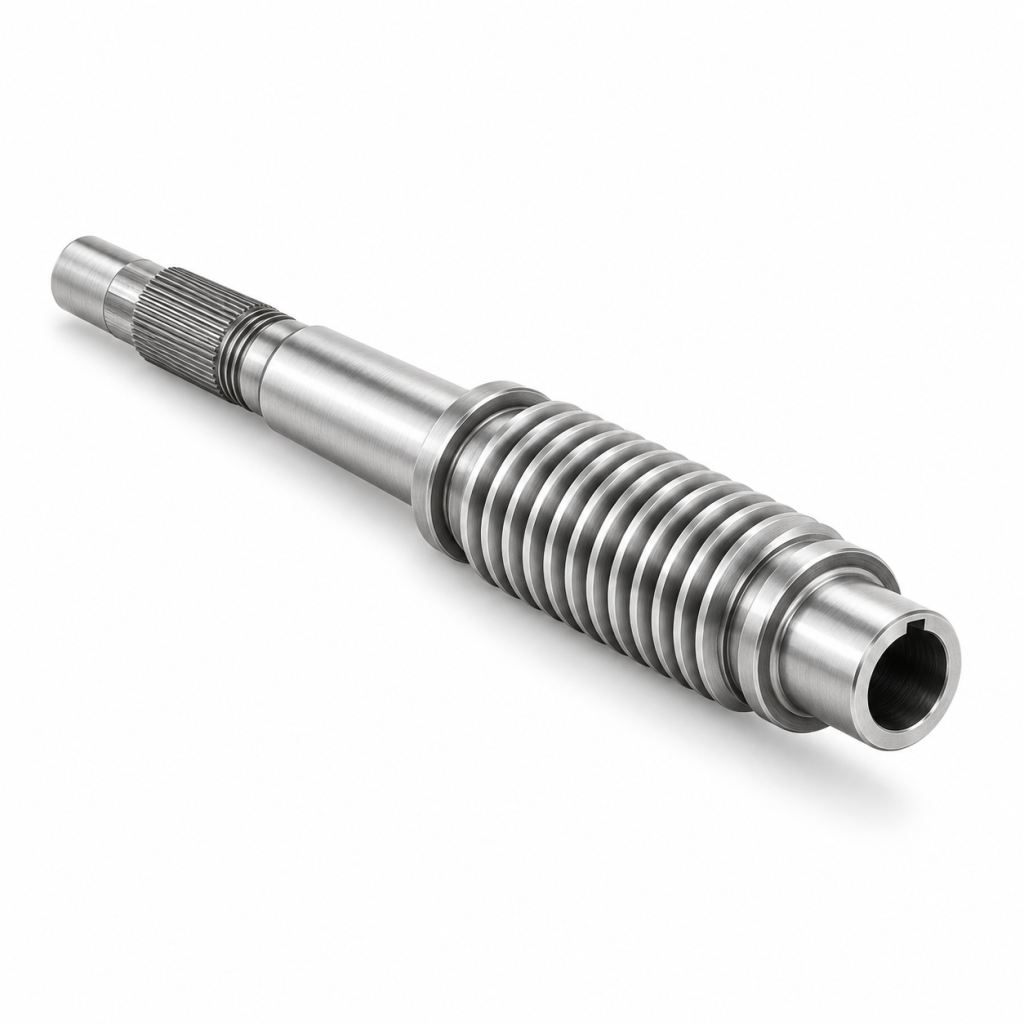
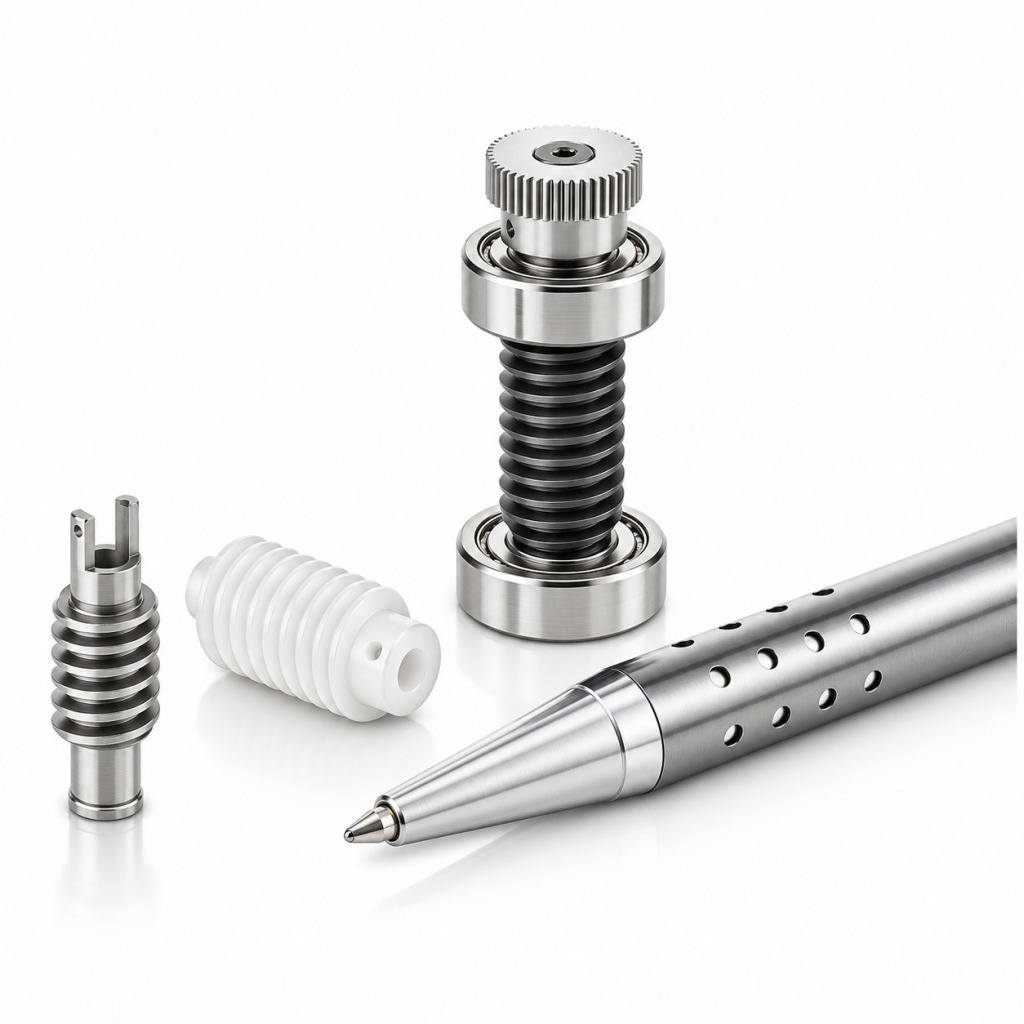
06A worm gear consists of two distinct components: a worm, formed by cutting a helical shape onto a shaft, and a mating gear, the worm wheel. Both components on a non-crossing shaft are referred to as worm wheels. Worm wheels are commonly used in large gear reductions, and therefore typically have a reduction ratio of 25:1 or higher. Worm wheels ensure reliable, continuous, smooth, and quiet gear operation when properly designed. Applications: Railcars and public transportation equipment, machine tool manufacturers, marine applications, etc. Materials available: Steel, alloy steel, brass, bronze, copper, aluminum, aluminum bronze, cast iron and ductile iron, stainless steel, phenolic resin, nylon/polymer, tool steel. Size range: Maximum pitch diameter/maximum 30.0″ Diameter pitch/from 1.5 to 48 degrees Face width/maximum 5.0″ Tooth cutting/AGMA Q9
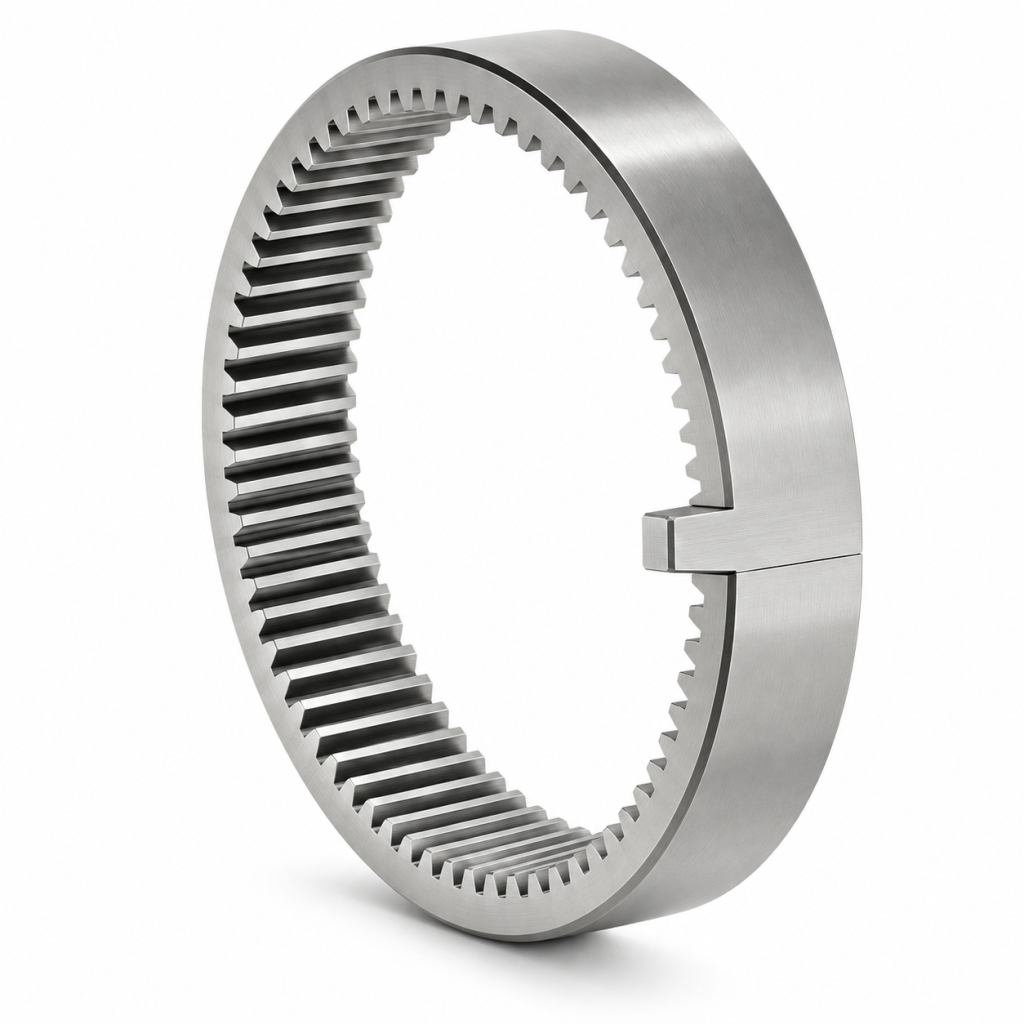
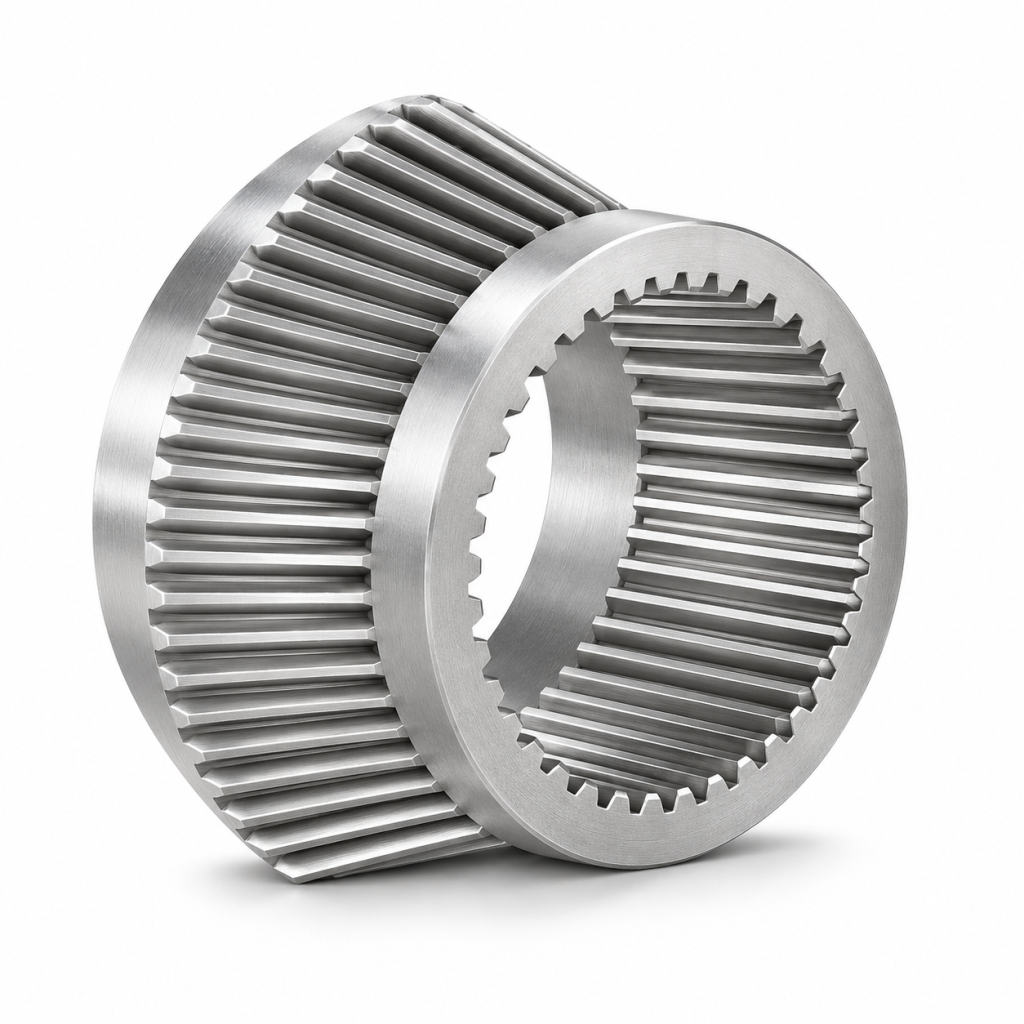
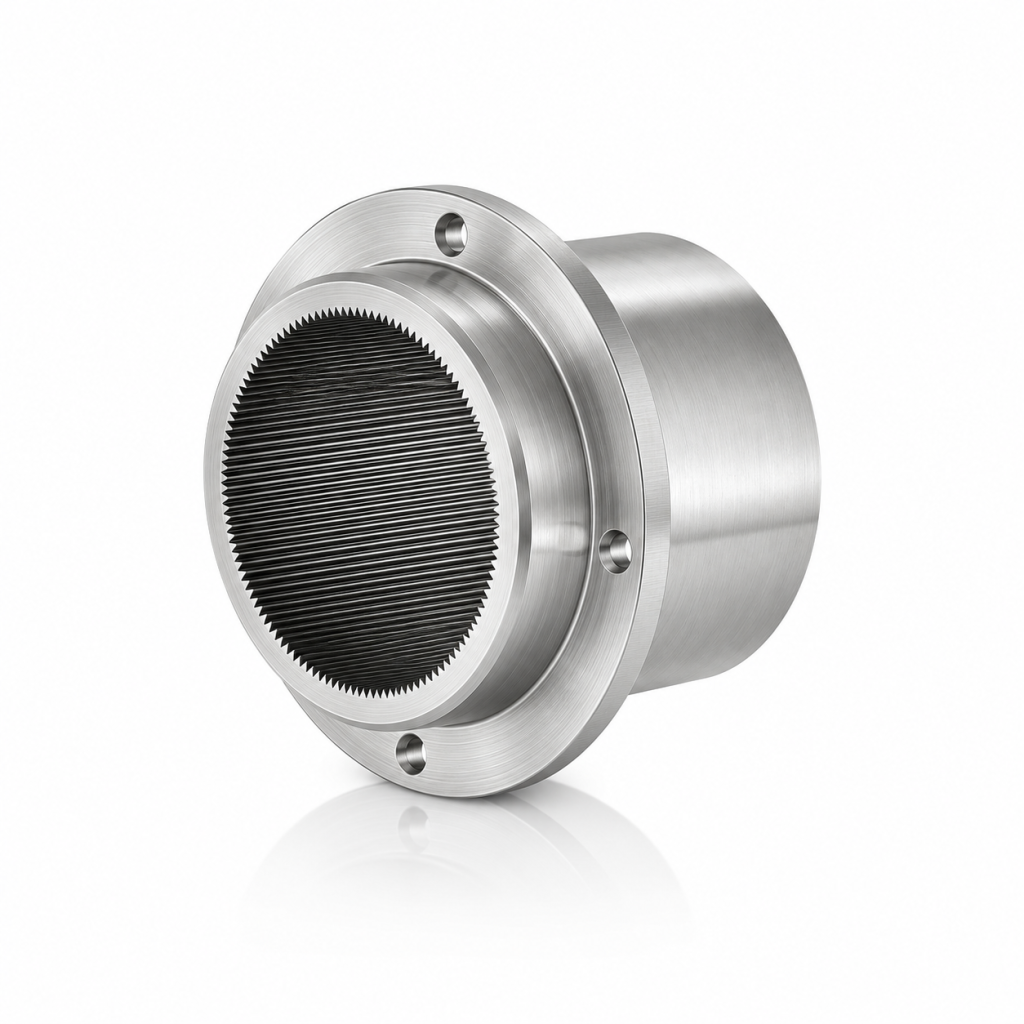
07Internal gears, also known as gear rings, are gears whose teeth cut into the inner diameter and mesh with spur gears. Internal gears are widely used in equipment and applications, especially in light-duty applications, because they offer greater speed reduction and reduced sliding wear. When two parallel shafts are involved in rotating in the same direction, internal gears can meet the requirement without the need for idle gears. Applications: Rollers, electric screwdrivers, pumps, positioning devices, automotive, and bicycle parts. Available materials: Steel, stainless steel, heat-treated steel, sintered steel, tool steel, ductile iron, gray cast iron, brass, bronze, copper, cast iron, aluminum, plastics, and phenolic resins.
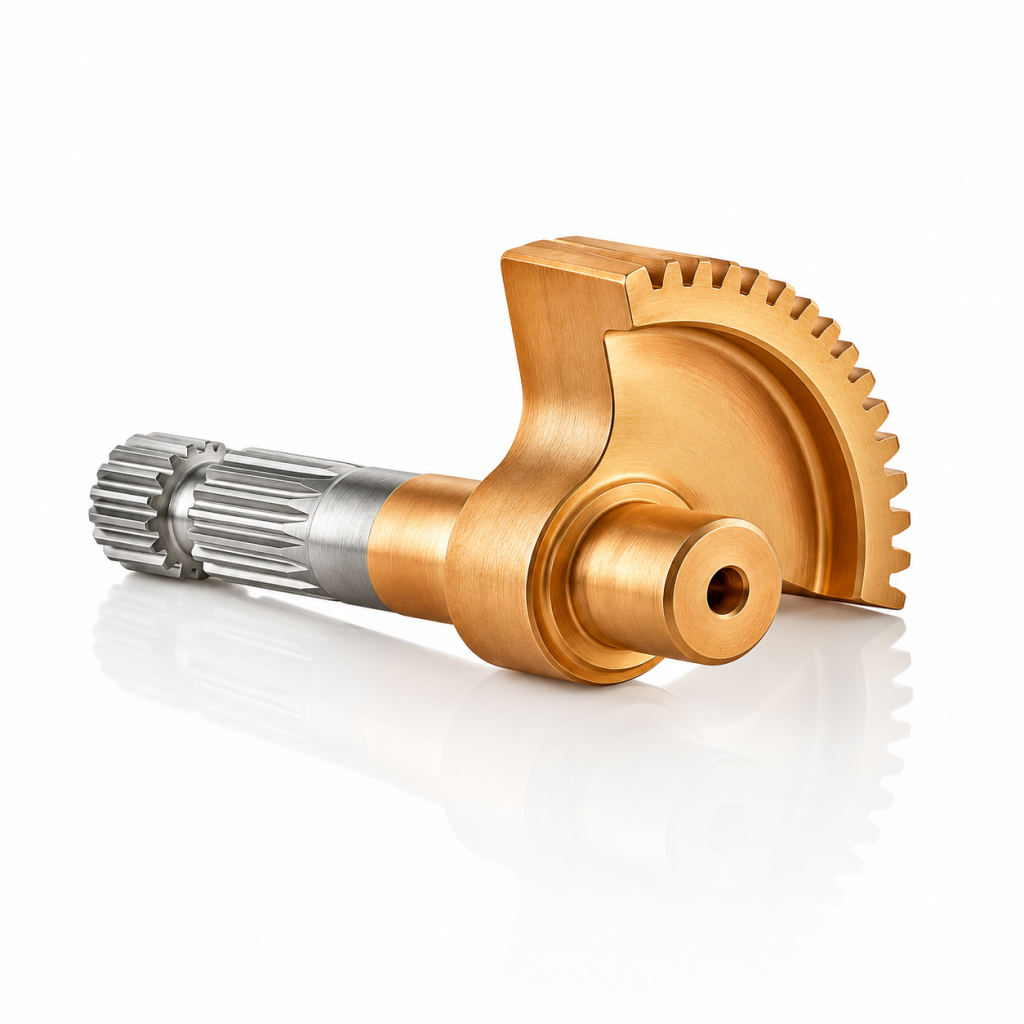
08A sector gear is a gear that cuts teeth only along a portion of its circumference. The rest of the gear has no teeth and is therefore very smooth. Sector gears are suitable for applications requiring less than 360° of rotation, such as cost-effective actuators that can be opened or closed with only 90° of rotation. This configuration saves on materials, space, and manufacturing costs. Spur gears, helical gears, bevel gears, and/or even worm gears can be used as sector gears. Typical applications include aircraft radar, where sector gears can scan the image in front, and X-ray machines using dual sector gears. Runsom is a manufacturer of sector gears made from a variety of materials, including aluminum, steel, and stainless steel.
09Bevel gears are designed to engage gears mounted on shafts at virtually any angle. In most cases, bevel gears are mounted on shafts 90 degrees apart, but they can also be designed to operate at other angles. Runsom bevel gears are known for their smoother, quieter performance and greater load capacity. Applications: Locomotives, marine applications, automotive, printing presses, cooling towers, power plants, steel mills, railway track inspection machines, etc. Materials available: Steel, alloy steel, brass, bronze, copper, aluminum, aluminum bronze, cast iron and ductile iron, stainless steel, phenolic resin, nylon/polymer, and tool steel. Size range: Maximum pitch diameter / 4,000″ Diameter pitch / from 10 to 120 Pitch face width / 750″ Cutting teeth / AGMA Q9
10Spur gears, also known as straight gears, typically have spur teeth and transmit motion and power between parallel shafts. Spur gears are easy to design and manufacture, making them the most cost-effective gear type in many situations. They are a suitable choice when applications require simple, easy-to-assemble gears.Applications: Electronics, construction equipment, machine tools, conveyors and material handling, automotive parts equipment, medical equipment, etc.Materials available: steel, tool steel, heat-treated steel, brass, bronze, copper, cast iron, fiber, plastic.Size range:Maximum mean diameter / maximum 30.0″ Diametral Pitch / From 3.0 to 180 degrees Width/Maximum 13.0″ Cutting teeth / AGMA Q11
11A sprocket, also known as a chain wheel or sprocket, is a toothed, irregularly shaped wheel that meshes with a chain, track, or other suitable material. Sprockets differ from gears and pulleys because they are used to efficiently transmit motion between two shafts. Runsom manufactures sprockets with tight tolerances, excellent load capacity, and high quality, making them ideal for abrasive applications. Applications: Bicycles, tracked vehicles, motorcycles, and other machinery used to transmit rotational motion between two shafts where gears are not suitable, or to transmit linear motion to tracks, belts, etc. Materials available: Steel, stainless steel, heat-treated steel, alloys, bronze, brass, copper, aluminum, aluminum bronze, cast iron, ductile iron, plastics, phenolic resins, nylon, polymers, and tool steel.
12Similar to spur gears, helical gears are also used with parallel shafts, but the teeth of a helical gear are angled to the axis or bore. Helical gears are very similar to spur gears, except that the teeth of a helical gear are angled to the shaft or bore. Compared to other types of gears used in similar applications, these teeth typically mesh more slowly and smoothly because the load is gradually and evenly transferred, resulting in incredibly quiet and excellent performance. Helical gears are available in left-hand and right-hand options. Applications: Gearboxes, CNC machine tools, robot joints, medical equipment, automotive, etc. Materials available: Steel, hardened steel, stainless steel, aluminum, aluminum alloys, brass, copper, copper alloys, bronze, nylon, non-metallic (phenolic resin). Size range: Maximum pitch diameter/maximum 20.0″ Diameter pitch/from 3.0 – 48 degrees Face width/maximum 13.0″ Cutting teeth/AGMA Q9
13Planetary gear sets, also known as planetary gear trains, consist of three parts: a ring gear, a sun gear, and multiple planetary gears. Different gear ratios can be easily changed simply by replacing the planet carrier and sun gear. Applications: Because planetary gears are typically smaller than other types of gearboxes, they are used in space-constrained applications. They can also be found in most modern automatic transmissions in the automotive industry. Elsewhere, they can be found in equipment such as augers and wind turbines, and in the drive systems of helicopters and aircraft engines. Runsom manufactures custom planetary gear assemblies and completes the assembly. Depending on the required application, they can be made from a variety of materials.
14A worm gear consists of two distinct components: a worm, formed by cutting a helical shape onto a shaft, and a mating gear, the worm wheel. Both components on a non-crossing shaft are referred to as worm wheels. Worm wheels are commonly used in large gear reductions, and therefore typically have a reduction ratio of 25:1 or higher. Worm wheels ensure reliable, continuous, smooth, and quiet gear operation when properly designed. Applications: Railcars and public transportation equipment, machine tool manufacturers, marine applications, etc. Materials available: Steel, alloy steel, brass, bronze, copper, aluminum, aluminum bronze, cast iron and ductile iron, stainless steel, phenolic resin, nylon/polymer, tool steel. Size range: Maximum pitch diameter/maximum 30.0″ Diameter pitch/from 1.5 to 48 degrees Face width/maximum 5.0″ Tooth cutting/AGMA Q9
15Internal gears, also known as gear rings, are gears whose teeth cut into the inner diameter and mesh with spur gears. Internal gears are widely used in equipment and applications, especially in light-duty applications, because they offer greater speed reduction and reduced sliding wear. When two parallel shafts are involved in rotating in the same direction, internal gears can meet the requirement without the need for idle gears. Applications: Rollers, electric screwdrivers, pumps, positioning devices, automotive, and bicycle parts. Available materials: Steel, stainless steel, heat-treated steel, sintered steel, tool steel, ductile iron, gray cast iron, brass, bronze, copper, cast iron, aluminum, plastics, and phenolic resins.
16A sector gear is a gear that cuts teeth only along a portion of its circumference. The rest of the gear has no teeth and is therefore very smooth. Sector gears are suitable for applications requiring less than 360° of rotation, such as cost-effective actuators that can be opened or closed with only 90° of rotation. This configuration saves on materials, space, and manufacturing costs. Spur gears, helical gears, bevel gears, and/or even worm gears can be used as sector gears. Typical applications include aircraft radar, where sector gears can scan the image in front, and X-ray machines using dual sector gears. Runsom is a manufacturer of sector gears made from a variety of materials, including aluminum, steel, and stainless steel.
Every category on this page is made in-house on 104 CNC machines in Dongguan and Zhaoqing — 3-, 4- and 5-axis machining centers, CNC lathes and turn-mill centers.
Held on critical features and verified on the vision measuring system before parts ship. Other dimensions are machined to your drawing.
CNC lathes for round parts with tight concentricity and fine finishes.
Shafts · bushings · sleeves · pins · fittingsMachining centers for prismatic and multi-surface parts, fewer setups on 5-axis.
Housings · brackets · plates · framesComplete machining in one setup for complex, non-standard parts.
Connectors · valve · hydraulic partsCustom gears and gear shafts machined to your drawing.
Spur · helical · bevel · worm · planetaryAluminum, steel, stainless steel, brass, copper, titanium, PEEK, POM, PA, ABS, PTFE, PC
As machined, anodizing, polishing, plating, brushing, heat treatment
Prototypes 1–100 pcs, production runs 10,000+ pcs
SolidWorks, AutoCAD, STEP, IGES and 2D PDF drawings
Quote in 24 h with DFM feedback, ISO quality standards, NDA on request
The same drawing review, first-article inspection and final check on the vision measuring system — whichever industry your parts go into.

Stainless fittings, manifolds and quick-connect parts for data-center cooling loops — leak-tight, clean and ready to assemble.

Gears, gear shafts, housings and brackets for reducers, grippers and motion systems.

Lightweight multi-face aluminum and titanium parts machined on 5-axis centers.

Brackets, housings and anodized performance parts, from prototype to 10,000+ pcs.

Small, complex stainless steel and titanium parts with clean, burr-free finishes.

Housings, flanges, fittings and shafts for pumps, valves, hydraulics and machinery, in steel, stainless and brass.
Not sure where your part belongs? Send the drawing — an engineer replies within 24 hours with the process and a price.
The categories are only a guide. Round parts usually go to turning, prismatic parts to 3-, 4- or 5-axis milling, and complex parts with both round and milled features to turn-mill. If you are unsure, send the drawing and our engineers choose the process for you.
Up to ±0.01 mm on critical features, whatever the category. Every order is checked against your drawing, and inspection reports are available on request.
Yes. Turn-mill centers machine round and milled features complete in one setup, and finishes such as anodizing, polishing, plating, brushing or heat treatment are specified with the same quote.
Yes. Besides aluminum, steel, stainless steel, brass, copper and titanium, we machine engineering plastics such as PEEK, POM/Delrin, Nylon/PA, ABS, PTFE and PC.
From prototype batches of 1–100 pcs to production runs of 10,000+ pcs. There is no minimum order quantity, and prototypes run with the same process and inspection as production.
A 2D or 3D drawing — SolidWorks, AutoCAD, STEP, IGES or PDF — with material, quantity and finish. We reply within 24 hours with a price and DFM feedback, and sign an NDA first if you ask.
Upload 2D/3D files
Quote & DFM feedback in 24 h
Prototype or first article
Production, inspection, delivery
Your request has been received. Our engineers will reply with a price and DFM feedback within 24 hours.
English